
 Why do smart people do dumb things? I’m not talking about ticky-tacky little things like backing the car into a garbage can or touching a hot stove. After all, people are human, and humans make mistakes. What I’m talking about is choosing to do the wrong thing even when you know it is wrong.
For instance, several years ago, a friend and I got into the cattle business. Roger, my partner, had been a farmer his entire life and knew how to run our operation. I was a newbie, a city kid who wanted to be a new age cowboy. I paid the bills. Roger made all the decisions.
Our cattle business was what is called a seed stock operation. We bought the best cattle we could afford, and we set out to improve their genetics—things like weight, pace of growth, temperament, age of weaning, etc.—with the goal of selling those cattle to other farmers to improve the genetics of their cattle.
Seed stock operations can be very profitable, but it can take years to become established enough to turn a profit. So, to help pay the bills, we sold off steers (castrated bulls with less than ideal genetics) and older or undesirable cows to farmers who would finish them (feed them until they reached slaughter weight) and sell them for beef.
To improve the genetics of our herd, we would artificially inseminate our cows with semen from bulls with genetics that would complement the cow’s genetics and improve the traits of the offspring. However, AI breeding is not foolproof, so we would put a “clean up” bull out on pasture with the cows. The goal was for the cows to calve during the first quarter of the year, so we had to make sure that breeding took place in late spring or early summer.
Calving during the first quarter of the year (January, February, or March) provides a lot of problems for farmers like us in Wisconsin. Those months are usually bitter cold, often snow-covered, and good nutrition for the cattle is at a premium. During the winter, cattle are brought in out of the pasture and are confined to pens where they are easier to feed. The pens are often crowded, muddy, open to the elements, and full of manure. It was not unusual for us to lose several calves each year due to the harsh conditions.
Because I was new to cattle ranching, I was open to new ideas, since I didn’t have old ideas to crowd them out. Roger gained all of his knowledge through experience. I had to learn mine from books. I don’t remember where I first read it, but one author suggested calving in spring or even summer, when the weather is better and food is much more plentiful. He said that cows in less harsh conditions and better health are less stressed when they give birth. That made sense to me. So, I suggested to Roger that we move our breeding program to the fall so calving would take place in the spring or summer.
Roger said “no.”
I thought I was on to something and I didn’t understand Roger’s reluctance to change our program. Naturally, I asked him why.
At first, his answer was, this is the way it’s always been done. He was right, cattle ranchers throughout our area calved at about the same time. During calving season, the discussion between farmers in the first few months of the year was about how calving was going. When a cow gave birth later in the year, it was considered a mistake.
As far as I was concerned, “That’s the way we always do it” was not a good reason. I pressed Roger. His response? “Farmers are looking for feeders (cattle ready to be finished on feed shortly before they reach slaughter weight) in October and November. In order to get them big enough by then, we have to calve at the beginning of the year.”
That seemed reasonable until I gave it a little thought. What Roger was talking about seemed like a chicken and egg problem. Was calving taking place early in the year because farmers needed feeders in October/November or did farmers buy feeders in October/November because cattle were calving early in the year? I asked the question and found out that, while a lot of feeders are purchased in October/November, there is a market for feeders year-round. The October/November time frame is just the main feeder season.
Then why couldn’t we start calving later in the year? Roger finally came clean and told me the real reason he didn’t want to change the program: He didn’t want other farmers looking at him like an outlier. Changing our calving schedule would embarrass him, and he didn’t want to deal with that. We never did change our calving program.
Let’s review:
- Conditions early in the year in Wisconsin are harsh;
- Harsh conditions can lead to difficult births, which is hard on the cow, the calf, and the farmer;
- Farmers lose money when calves die;
- There really is no credible argument against calving later in the year;
- Even so, we didn’t change our procedures because we were afraid other farmers would judge us.
We knew there was a better way, yet we stuck with a worse way to avoid potentially looking foolish in front of other farmers. We were smart people purposely doing a dumb thing.
This phenomenon is not confined to farmers. In fact, it happens to all kinds of different people in all walks of life. As one example, in 1962, Wilt Chamberlain scored 100 points for the Philadelphia Warriors in a game against the New York Knicks. Of his 100 points, 28 came from free throws. Chamberlin made 28 or 32 free throws, an 87.5% success rate. This was unusual because Chamberlain was not considered a good free throw shooter. In fact, he was a 51% free throw shooter for his career. How did he do so well in this one game?
During his first two years in the league, Chamberlain was a miserable free throw shooter. His teammate, Rick Barry, one of the all-time great free throw shooters in NBA history, offered to work with him. Barry had a different way of shooting free throws. Rather than shooting from in front of and slightly above his head like most people, Barry shot underhand. He convinced Chamberlain to give it a try.
Although Chamberlain was reluctant, he finally agreed. During the 1961-62 season, the season that included his 100-point game, Chamberlain made a career high 61.3% of his free throws. His work with Barry was a paying off. The next year, he went back to shooting overhand and his free throw percentage dropped. Chamberlain played for fifteen seasons in the NBA and he never had a better season shooting free throws than he did in the 1961-62 season. Why would he quit shooting underhand?
In his autobiography (the one where he claimed to have slept with more than 20,000 women), Chamberlain admitted that he was wrong to give up shooting free throws underhand. He knew it at the time he quit. But he did it anyway because he was worried people might think of him as “a sissy.” This supremely gifted, 7’1” athlete, who was one of the best players to ever live, was afraid people with none of his ability, none of his grace, none of his accomplishments, would call him a name. So, he chose to be less of a player than he could have been.
Wilt Chamberlain was a smart guy who did a very stupid thing, knowing full well even when he was doing it, that it was wrong.
It’s not just individuals who fall into this trap. Entire organizations do things they know are wrong. There are a plethora of examples in other areas, but let’s stick with sports.
David Romer is an economics professor at the University of California-Berkeley. He’s also a football fan. His gut told him that punting on fourth down was a bad play. But it was just a gut instinct, and most of the history of the NFL disagreed with him. So, he did what economists do. He analyzed the issue using math. As it turned out, his gut was right.
Romer examined the choice to punt, turning the ball over to the opponent, versus going for a first down on all four downs of a team’s possession. What he found was that going for a first down increased the chances of a team winning by between 0.5%-2.1% versus punting on fourth down (The findings are more complicated than this. I’ve provided the dumbed down version.). Yet, even though NFL teams are aware of this study and don’t dispute the results, they still overwhelmingly punt on fourth down, even in short yardage situations. Why is that?
I suspect the reason is that going for it on fourth down and failing is too visible. I almost said “mistake” instead of “too visible,” but is it really a mistake, even if it doesn’t work?
In his book, Delivering Happiness: A Path to Profits, Passion, and Purpose, author Tony Hsieh compares making business decisions to playing poker. He says that successful poker players are those that understand odds and probabilities, and make decisions based on them. For instance, if a player makes a bet based on the probabilities every time she is dealt a certain hand (what poker players refer to as “hole cards”), more times than not, it will be a successful bet. When it is not successful, the decision to bet isn’t a mistake. It’s just part of the process. The moral of Hsieh’s story: Successful people focus on process, not just results.
Likewise, a football coach who goes for it on fourth down isn’t making a mistake when his team fails to make the first down. His decision was right. The result just didn’t turn out the way he had hoped. Even so, the decision will work out more times than not, albeit just slightly more times.
Another economics professor, Richard Thaler from the University of Chicago, analyzed the NFL draft and came to the conclusion that teams value first round picks too highly, and lower round picks not nearly highly enough. He concluded that teams would be much better off trading first round picks for multiple second and third round picks (a common trade exchange rate). For the cost of a first round pick, teams can sign four or five lower round picks and will almost always receive more production from those picks than they would from a single first rounder.
Thaler’s paper caught the attention of the NFL and he has now consulted with multiple teams. Without exception, every team he has consulted with has refused to follow his advice. They knew his opinion when they hired him. They paid him a lot of money to go over the findings of his study and make recommendations. And then they went out and did the exact opposite of what he suggested. They knew they were doing the wrong thing, so why did they do it?
Thaler thinks there are a couple of reasons. One is that fans like the big name, exciting players available in the first round. Teams aren’t in the business of disappointing fans. Even so, wouldn’t winning more games by having lots of good players rather than one great player make fans happy? Maybe, but that’s not the only reason teams ignore Thaler’s advice.
Generally speaking, team owners and team officials like shiny objects. They try to find ways to make that highly-touted quarterback or speedy wide receiver their own, and it rarely matters to them that they can find players almost as good at a fraction of the cost in lower rounds. So, they go for the quick rush of adrenaline, the headline grabber, the short-term high rather than the long-term investment. They know it’s wrong, but they do it anyway.
People, and as an extension, organizations, are interesting creatures. We are weird and wacky and wonderful. And sometimes, even when we know doing something is wrong, we do it anyway. We say we want to win. We say we want to be successful. But mostly, we want to be happy and comfortable and accepted. And the need for these seemingly simple things is apparently much more powerful than our desire for success.
This blog post was inspired by an episode of Malcolm Gladwell’s excellent podcast, Revisionist History.


 I have a sinking feeling, a sense of dread that is threatening to consume me. And every day, it seems to get worse.
 I was watching 60 Minutes recently and saw a story about the Tulsa Massacre of 1921. It was an amazing story, made all the more amazing by the fact that the massacre occurred 100 years ago, yet I had never heard of it. I wasn’t alone. The 60 Minutes crew interviewed a man who was born and educated in Tulsa, but he had never heard of the massacre either.
 I like living in the United States. Sure, I’ve never lived anywhere else, but I think we have a pretty good quality of life here. We have freedom, and opportunity, and at least in general, civic pride. True, the United States is not perfect. Our healthcare system is among the worst in the free world (It’s the most expensive with some of the worst outcomes), we imprison a higher percentage of our population than any other country on earth, and we don’t do a particularly good job of taking care of the least among us. Even so, most people in the United States enjoy a high standard of living when compared to other countries.
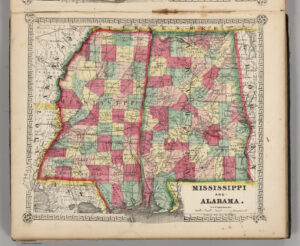 If you look at a map of the United States and focus on the southeast portion of the country, you might notice something kind of unusual. Look directly at Mississippi and Alabama. See anything strange or interesting. If you see that the two states are near mirror images of each other, you’re seeing what I’m seeing. There’s a story behind why these two states look so much alike.
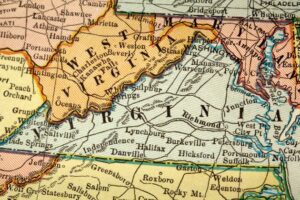 People of a certain age don’t even have to think about what words come after the phrase, “Almost Heaven.” The obvious answer is, “West Virginia.” But is that really correct?
 I met Brett when we were both in fourth grade. He had a curly mop of hair, a crooked smile, and a mischievous personality. He liked to have fun and didn’t take much of anything too seriously. We became fast friends.
 I have a confession to make. I haven’t been writing much in recent months. Actually, that’s not quite true. I’ve been writing a lot about our current political reality, but I haven’t been able to make any progress on the two books that are in process.
 In early July 1854, Abraham Lincoln took some time to prepare for his upcoming campaign by writing down some thoughts he could use in speeches on the campaign trail. At the time, Lincoln’s political philosophy of the purpose of government was considered radical in comparison to his contemporaries. No other president before him took such an activist approach to governmental purpose as Lincoln did.
 As you’ve probably heard, 2020 was a strange year. In addition to a worldwide pandemic that changed all of our lives, we had an economy in ruins, country-wide protests for equal rights for black Americans, and a dysfunctional government that became more and more authoritarian as the year progressed. As a result, my reading habits were a bit different than usual.
 10.
10.  9.
9.  8.
8. 7.
7. 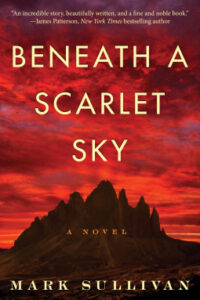 6.
6.  5.
5. 
 4. (tie)
  3.
3. 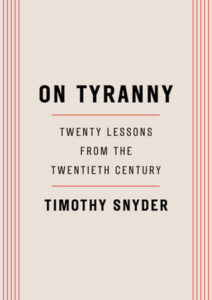 2.
2.  1.
1. 